
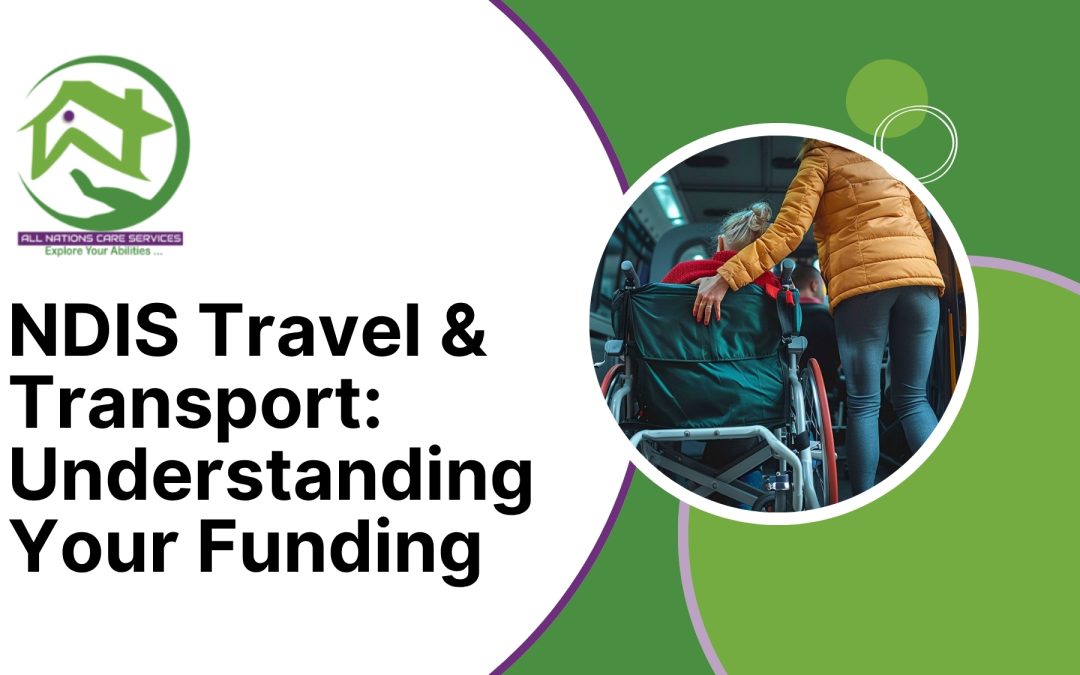
If you have ever opened an NDIS invoice and wondered why a 20-minute trip cost you three different line items, you are not alone.
Getting across Sydney for therapy, work, or simple errands should be straightforward. Instead, most participants are left guessing whether their ride comes out of their core budget, their direct travel allowance, or their own pocket.
The NDIS breaks transport into distinct, predictable rules. Once you know which bucket pays for what, you can travel anywhere across Sydney without burning through your plan funding or getting hit with surprise fees.
Understanding NDIS Transport: The Two Separate Funding Pots
The most common point of confusion is assuming all travel comes from one single balance. Under the NDIS, travel is divided into two separate funding mechanisms, each designed for a different purpose.
Category 02 Transport: Your Direct Fortnightly Allowance
Category 02 is a recurring allowance paid directly into your personal bank account every fortnight. This applies even if the rest of your plan is NDIA-managed.
It is designed specifically for participants who cannot use public transport independently due to substantial functional impairment. You can spend this allowance directly on taxis, community transport, or private travel arrangements.
The NDIA allocates this funding across three standard tiers:
- Level 1 (up to 1,784/year|~69/fortnight): For participants not attending regular work, study, or day programs, but seeking general community access.
- Level 2 (up to 2,676/year|~103/fortnight): For participants working or studying part-time (up to 15 hours per week).
- Level 3 (up to 3,456/year|~133/fortnight): For participants working, studying, or actively looking for employment for 15 hours or more per week.
Category 04 Core Supports: Activity-Based Transport With a Support Worker
Activity-based transport does not come out of your Category 02 cash allowance. Instead, it is funded through your everyday Core Supports budget (Assistance with Social, Economic and Community Participation).
This funding applies when a support worker accompanies you on an outing and drives you in their vehicle, your vehicle, or travels alongside you on public transit.
Because this is tied to active support time, the worker’s hourly rate continues while driving, ensuring you receive continuous, hands-on care throughout your trip.
Capacity-Building: Travel Training for Long-Term Independence
Travel support is not only about getting a ride. It can also focus on building your confidence to travel on your own.
As part of your Capacity Building budget, funding can be directed toward practical Development of Life Skills focused on travel independence.
A support worker can practice taking specific train or bus routes with you, teach you how to top up and tap your Opal card, and help you navigate transit apps safely.
When Does the NDIS Fund Assistance with Travel in Sydney?
The NDIS operates on the standard of “reasonable and necessary.” Travel support is funded when your disability directly prevents you from getting around the way someone without a disability would.
What Counts as “Reasonable and Necessary” Daily Travel?
The scheme does not fund general commuting costs that every member of the public pays out of pocket. Instead, it covers transport directly tied to your personal goals and disability-related needs.
Eligible journeys typically include:
- Traveling to therapy sessions, medical consultations, and specialist appointments.
- Attending supported employment, tertiary education, or vocational workshops.
- Visiting community centres, recreation programs, social groups, and sports activities.
- Running essential personal errands, such as assisted grocery shopping or banking.
When you need specialized vehicle modifications, those are assessed separately under Assistive Technology rather than standard travel funding.
Getting Around Greater Sydney: Combining the NDIS with the NSW Taxi Subsidy (TTSS)
Living in Sydney gives participants access to state-based schemes that work alongside their NDIS budget.
The NSW Taxi Transport Subsidy Scheme (TTSS) provides eligible residents with a 50% subsidy on taxi fares, up to a maximum subsidy of $60 per trip.
Using TTSS alongside your NDIS Category 02 direct allowance allows you to stretch your transport dollars significantly further, especially when traveling long distances across suburbs like Penrith, Blacktown, and Parramatta.
Provider Travel vs. In-Car Mileage: How Invoicing Actually Works
Unexpected invoices cause unnecessary stress. Knowing the difference between provider travel time and participant transport mileage keeps your budget predictable.
Provider Travel Time (Reaching Your Home in Sydney Metro)
Provider travel covers the time it takes for a support worker to travel from their base or previous appointment to your home.
In metropolitan Sydney (classified as MMM1 under NDIS guidelines), registered providers can claim up to 30 minutes of travel time at the worker’s standard hourly rate. This must always be clearly stated and agreed upon in your Service Agreement before support commences.
Per-Kilometre Rates for Standard and Modified Accessible Vehicles
When a worker drives you during your shift (activity-based transport), non-labour running costs are billed on a per-kilometre basis.
The NDIS Pricing Schedule sets clear upper limits for these charges:
- Up to $0.99 per kilometre for standard private or provider vehicles.
- Up to $2.76 per kilometre for modified, wheelchair-accessible vehicles.
These rates cover fuel, maintenance, and vehicle insurance, ensuring the vehicle you ride in remains safe and roadworthy.
Handling Tolls and Parking Fees Without Surprise Invoices
Sydney has several major toll roads, including the M4, M7, and M2. If your journey requires using a toll road or parking at a hospital or shopping centre, these out-of-pocket costs are separate from per-kilometre rates.
A trustworthy provider will discuss these routes with you beforehand. You can decide together whether to take tollways for speed or use arterial roads to keep costs down.
What Real NDIS Transport Support in Sydney Looks Like
Reliable transport support should never feel like an impersonal taxi service. It is a vital part of your Assistance with Daily Personal Activities routine.
Beyond a Ride: Genuine Accompaniment, Appointments, and Errands
While an ordinary driver simply drops you at the curb and departs, Dedicated Assistance with Travel Sydney means having a consistent support worker right beside you.
Your worker assists you out of the car, carries your bags, checks you into your medical appointment, and sits with you in the waiting room if needed.
They provide reassurance, assist with communication barriers, and ensure you return home safely and comfortably.
Safe, Accessible Transfers Across Kingswood, Penrith, and Greater Western Sydney
Local knowledge makes a significant difference in everyday travel. Having a local team means your support workers understand the easiest drop-off zones at Nepean Hospital, the quietest accessible entrances to local shopping centres, and the best travel times to avoid Sydney traffic jams.
At All Nations Care Services, we prioritize this local familiarity to reduce travel anxiety and keep your outings calm, punctual, and enjoyable.
Frequently Asked Questions About Sydney NDIS Travel Funding
Can my support worker drive me in their own vehicle or my vehicle?
Yes, both options are permitted under the NDIS.
If the worker uses their own car, the agreed per-kilometre rate applies alongside their hourly support rate. If they drive your personal accessible vehicle, only the worker’s hourly labour rate is billed.
Can I use my transport allowance for rideshare services like Uber?
If you receive a direct Category 02 fortnightly cash allowance into your bank account, you can use those funds for rideshares, standard taxis, or private community buses that best fit your schedule.
What happens if my transport funding runs low before my plan reassessment?
If your circumstances change—such as starting a new job, beginning regular therapy, or moving to a suburb with fewer transit options—you do not have to wait for your plan to expire.
You can request an NDIS plan reassessment due to a change of circumstances, backed by letters from your coordinator or occupational therapist outlining your increased mobility needs.
Plan Your Journeys with Confidence
Transport funding should open doors to your community, not add administrative headaches to your week. With transparent agreements and clear line-item billing, getting to where you need to be becomes simple and stress-free.
If you are looking for reliable NDIS Transport Support Sydney delivered with warmth and dignity, All Nations Care Services is here to assist.
- Office Location: Kingswood NSW 2747
- Direct Line: 0433 219 545
- Email: info@allncs.com.au
- Website: allncs.com.au